
max vo
Being a “car guy” doesn’t start with cars anymore.
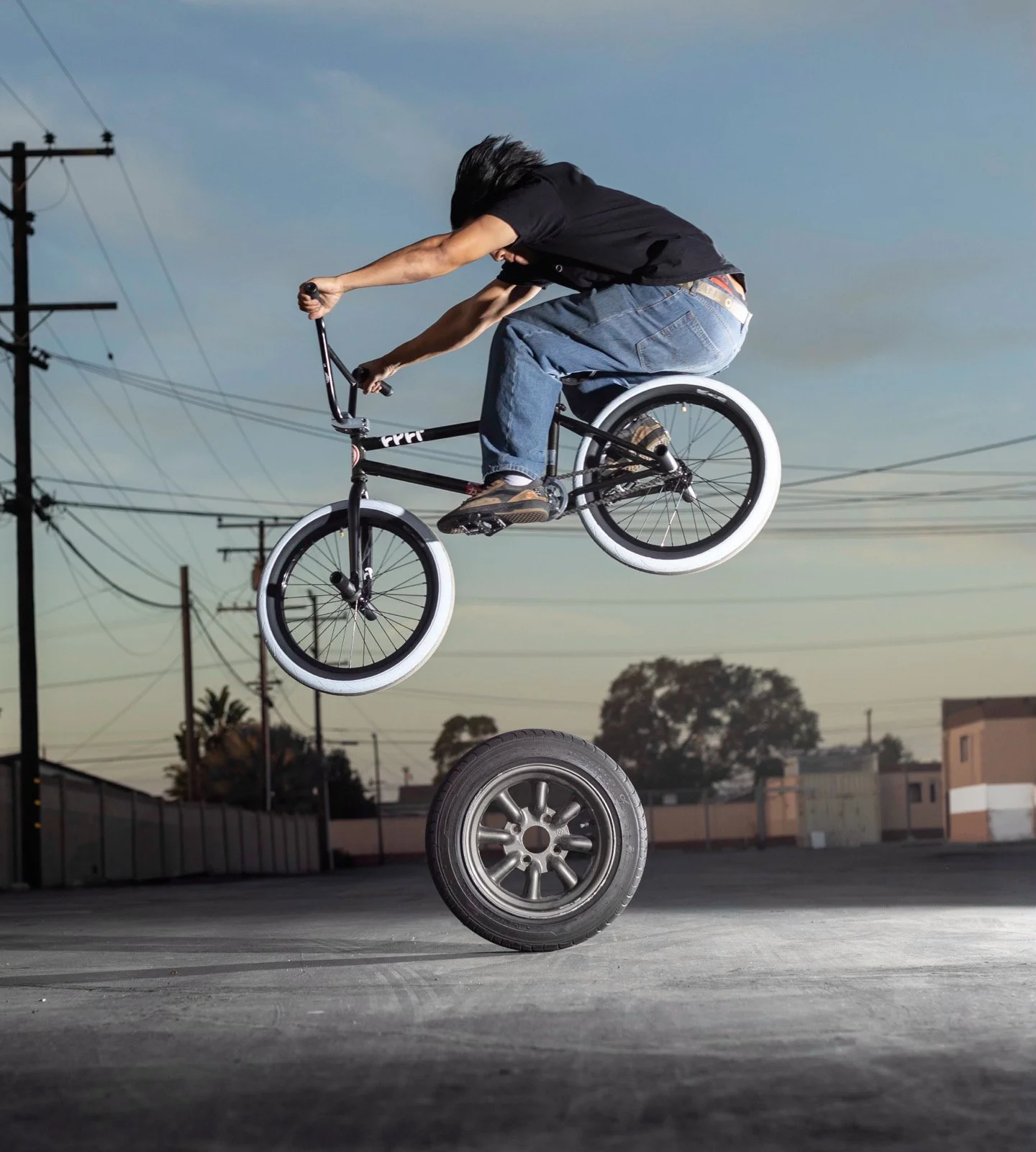
For a lot of people, it started with bikes, skateparks, and chasing spots. That same mindset—finding lines, building style, doing things your own way—naturally made its way into cars.
Now it’s not about getting there. It’s about what you build.
That crossover—where BMX, skate culture, and cars meet—is exactly why Max Vu stands out. His story isn’t about switching lanes—it’s about never separating them in the first place
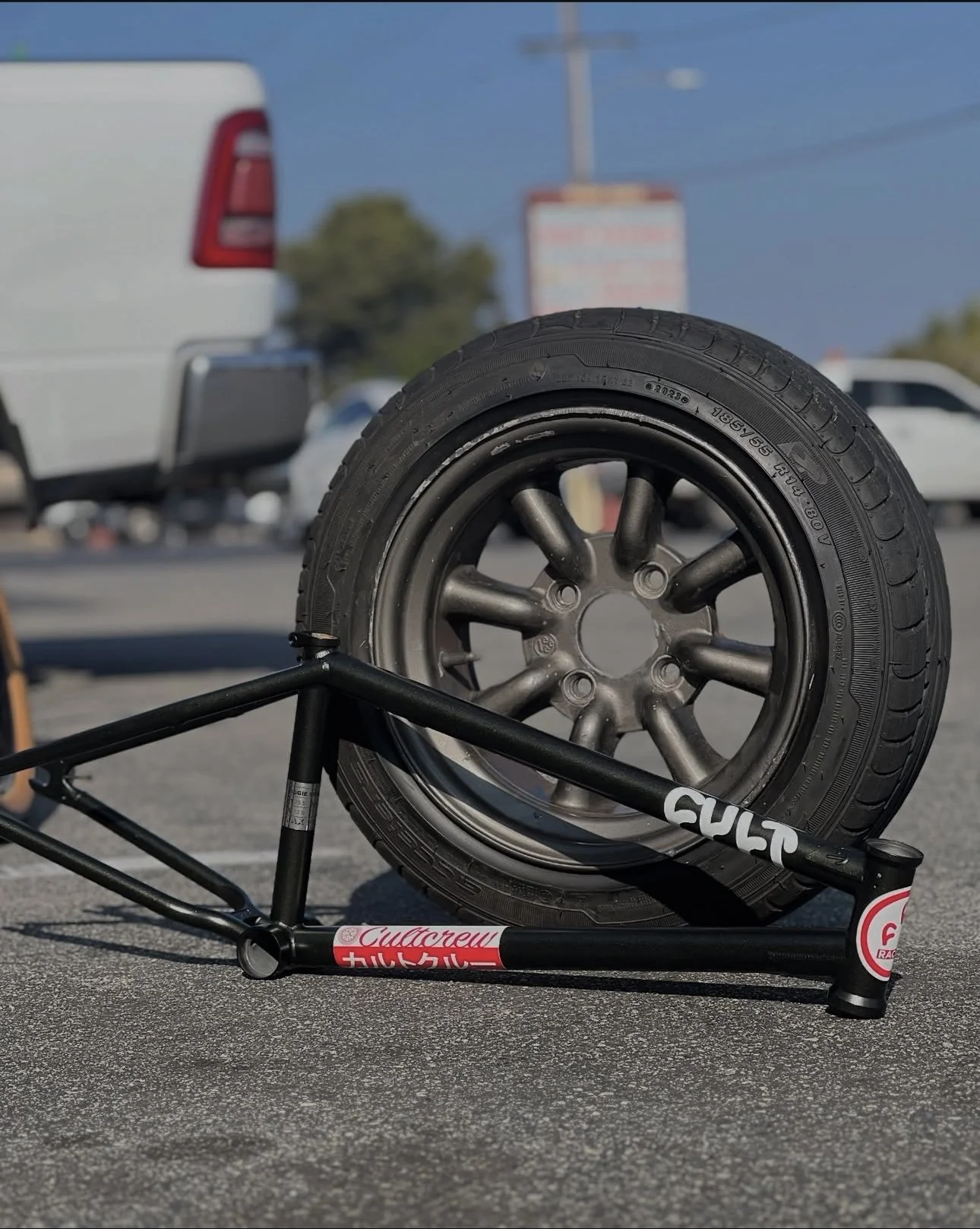
Max Vu didn’t just grow up around BMX—he was raised in it.
His dad’s shop, Epic BMX in Westminster, California, has been part of his life since day one. It’s more than just a shop—it’s where he learned, rode, and developed his style. Even now, it’s still where you can find him, surrounded by the same environment that shaped him.
From early on, it was clear he wasn’t just another kid at the park.
As a kid, Max was already around something bigger—when Cult and Epic BMX came together in the early days to develop smaller bikes, he was right there, growing up alongside it. Before sponsorships, before recognition, he was already part of the process.
Max went on to build a name for himself in BMX, riding under a grassroots program and earning support from brands like Cult, Vans, The Shadow Conspiracy, and Shadow Riding Gear. His riding pulls from influential names like Dakota Roche, Ruben Alcantara, and Taj Mihelich—riders known for style, control, and staying power.
But it didn’t stop at just riding.
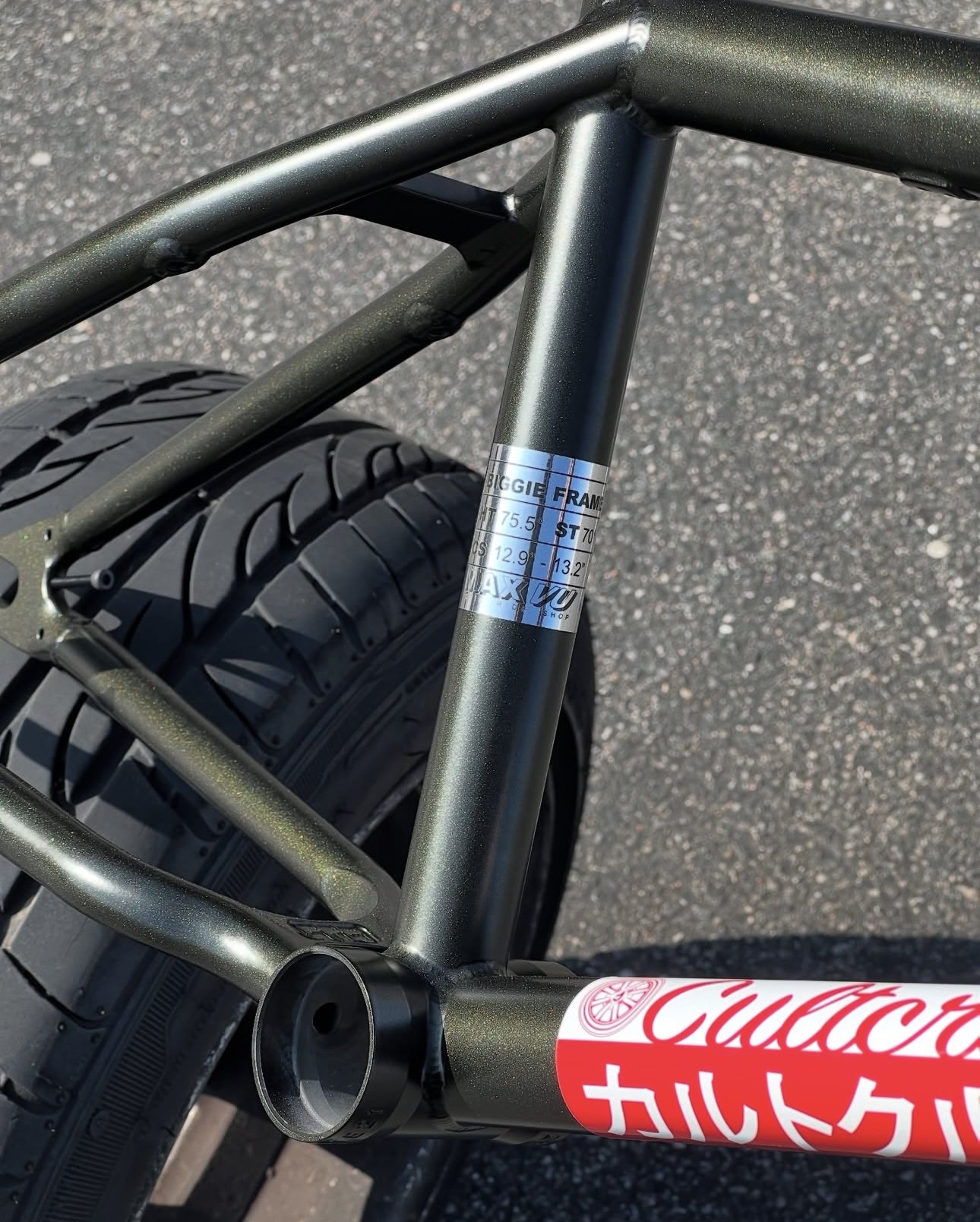
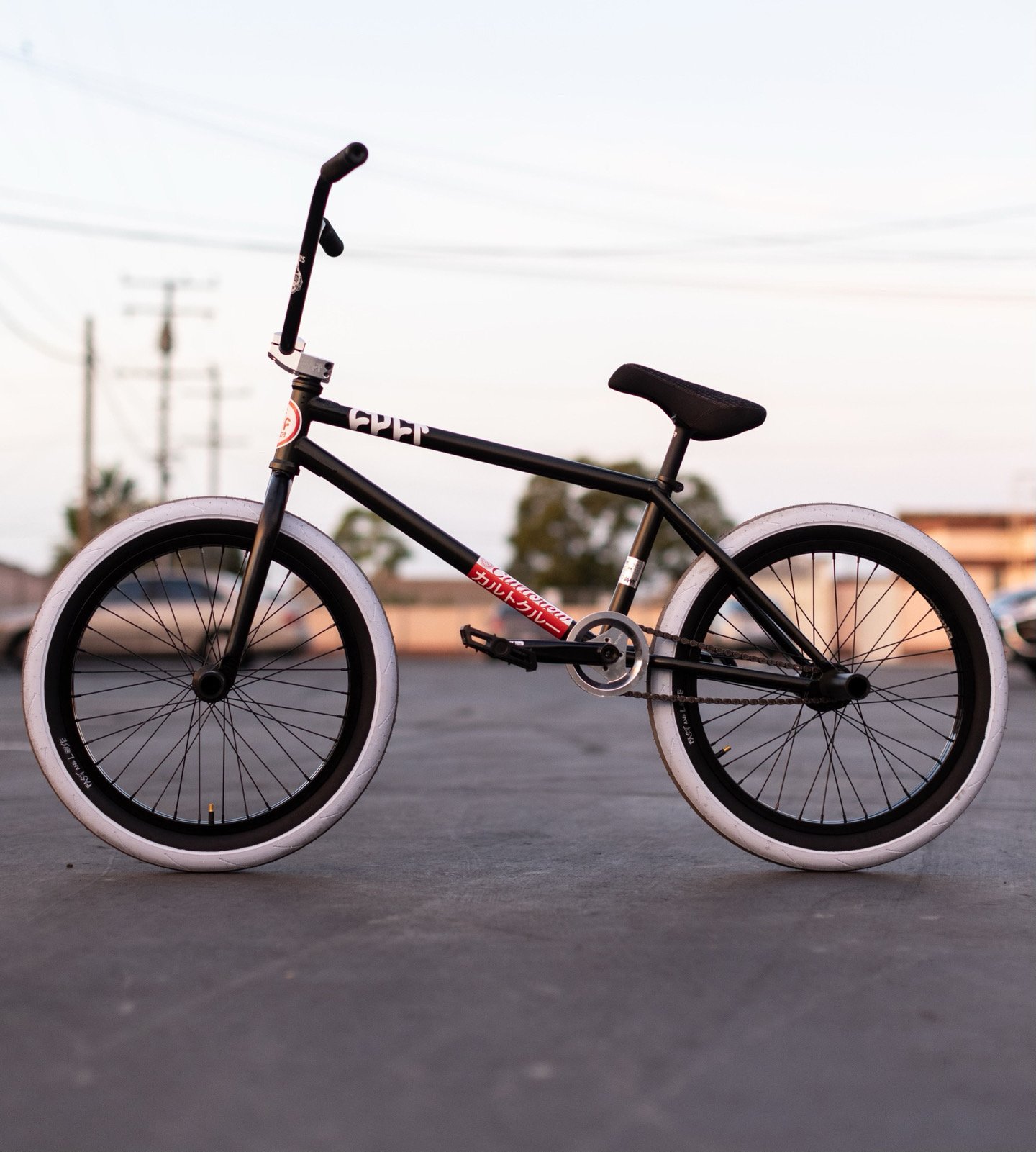
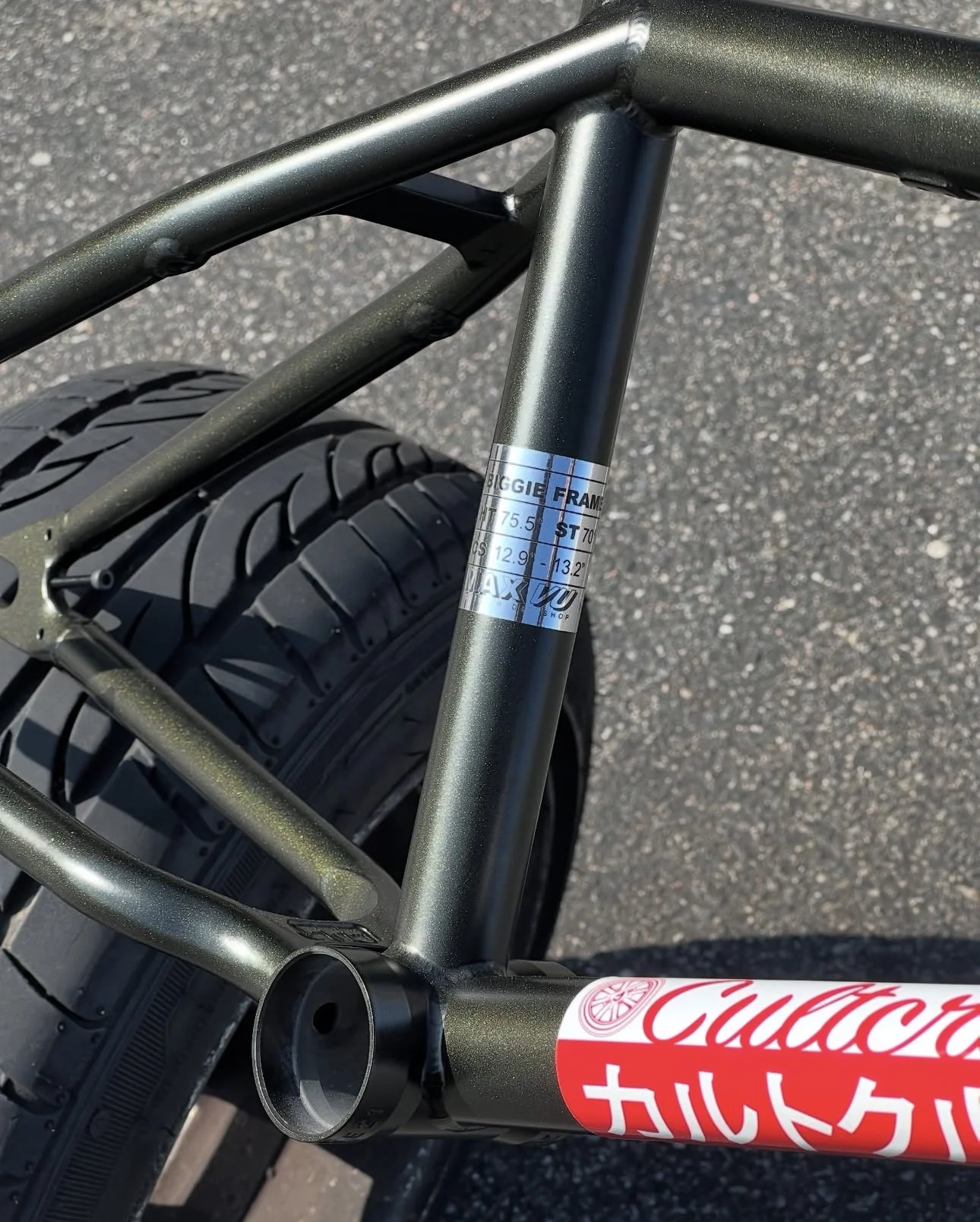
Max went on to develop signature frames and parts—something that says a lot about how deep his influence runs. From his signature frame and stem, to more design-driven pieces like his Hoshino Racing Impul sprocket—modeled after the look of Advan A3A wheels—everything points back to the same place.
His signature frame isn’t just a colorway—it’s a direct reflection of his automotive roots. Inspired by Watanabe wheels, the frame carries over the same tones and even pulls from the original wheel decals, down to the idea of a spec-style graphic.
It’s not just a BMX product.
It’s car culture—translated into BMX.
And that crossover is where everything starts to connect.
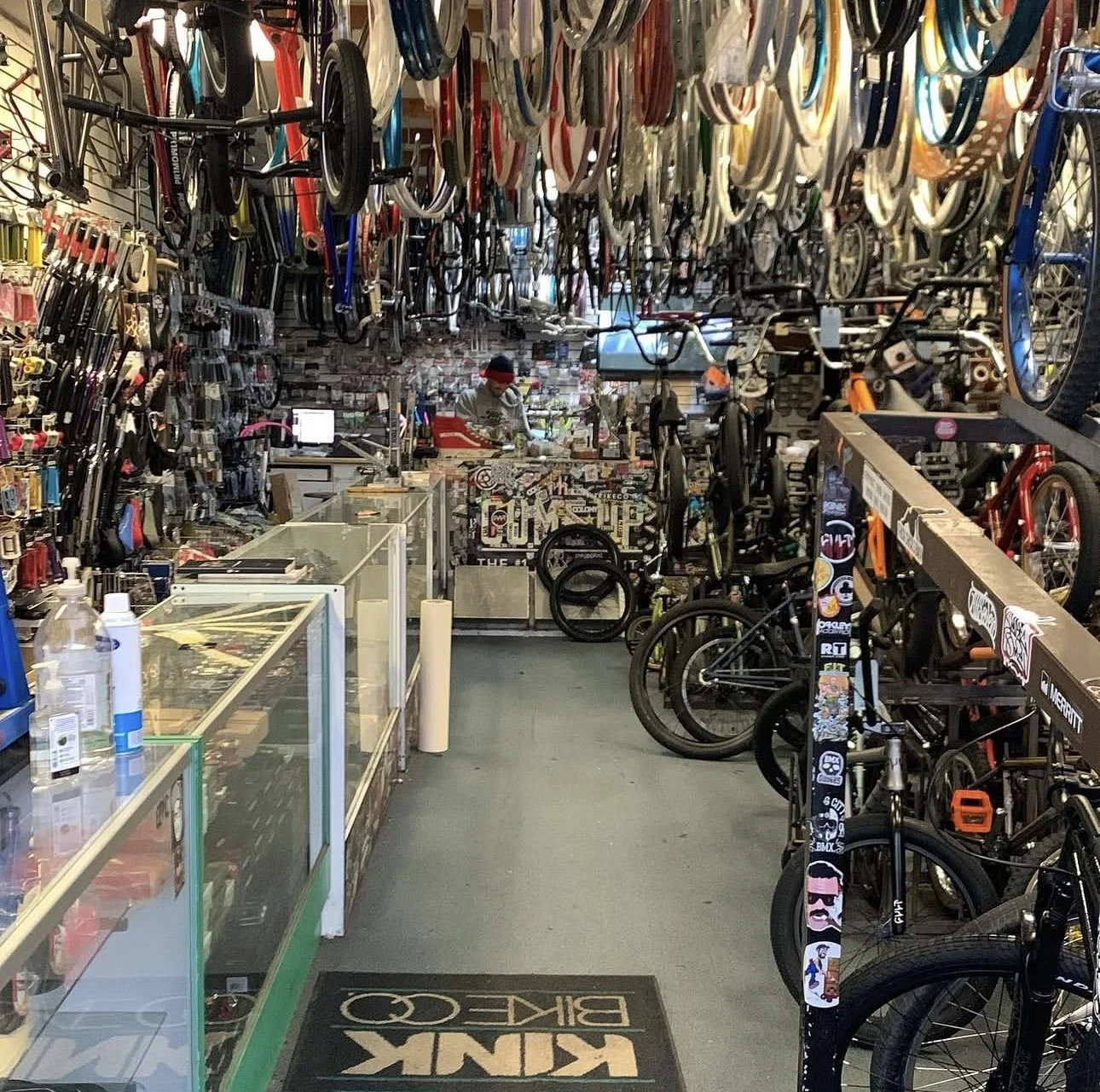
You can still find Max at his dad’s shop today—most days, he’s there, still in the same place it all started.
His dad, Phu, opened and runs Epic Bikes, a shop that’s been part of the Westminster scene for over 20 years. It’s more than just a storefront—it’s a cornerstone of the local BMX community, built on consistency, family, and culture.
On slower days, you might even catch Max out front working on fiberglass parts—hands-on, shaping and building the same way he always has.
If you ever get the chance, stop by and check it out:
16483 Magnolia St., Westminster, California
If you can’t make it in, you can still tap in online:
Before most kids even understood what they were looking at, Max was already hands-on.
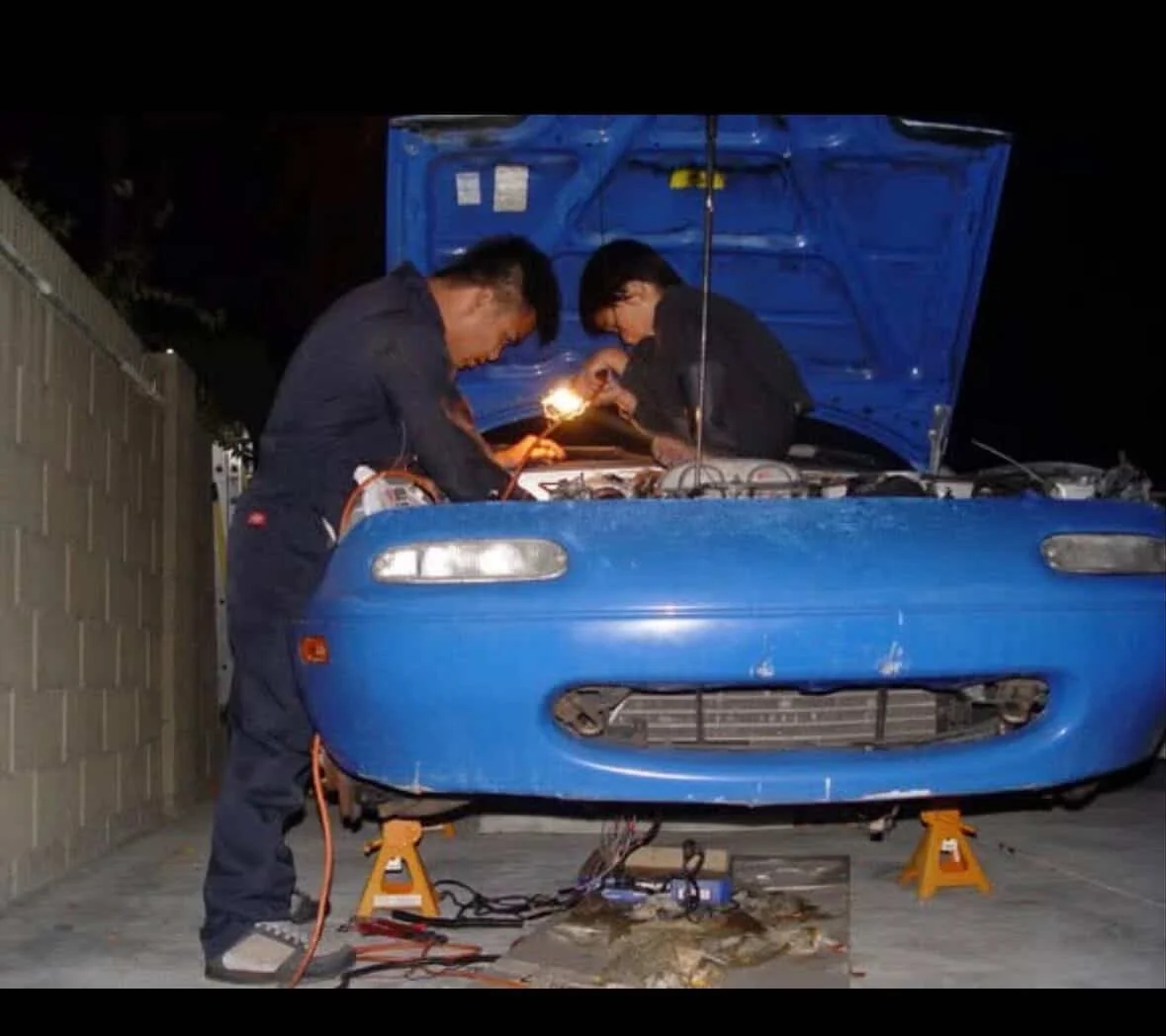
He remembers being just 7 years old, working alongside his dad on one of his Mazda Miatas—helping with a wire tuck. At that age, it wasn’t about builds or aesthetics yet—it was just being involved, learning by doing.
But looking back, that moment says everything.
While BMX gave him his identity, cars were always there in the background—parked in the driveway, being worked on in the garage, part of everyday life. AE86s, Celicas, Supras—these weren’t dream cars later on, they were part of his childhood.
And just like BMX, he didn’t approach it halfway.
His current Corolla is proof of that.
A 1981 Toyota Corolla 4-door, reworked with a 4AGE swap out of an AE86 and converted to manual—it’s built with purpose, not just for looks. Sitting on T3 AE86 suspension and 13” Riverside wheels, it carries a mix of carefully chosen parts and fully custom work, including a fiberglass front lip he built with his dad.
But like any real build, it came with problems.
Fitment issues—especially around the header and exhaust near the steering column—left no real off-the-shelf solution. So he did what he’s always done: built his own. A fully custom header and exhaust system, made from scratch.
No shortcuts. No easy fixes.
That same mindset carries over into what he puts out into the world.
Max doesn’t just build for himself—he creates parts through his own platform, turning ideas into real products. Whether it comes from solving a problem or pushing a certain look, everything ties back to the same DNA.
What starts in the garage doesn’t stay there.
It shows up in the parts.
It shows up in the riding.
And it shows up in the culture around him.
WHAT’S NEXT
Right now, Max isn’t slowing down—he’s just getting more precise with what he puts out.
He recently finished a longer version of his signature stem, a refined take on something he’s already made his own. It’s a small change on paper, but like everything he does, it comes from real use—figuring out what works, what feels right, and pushing it further.
At the same time, he’s continuing to work on new ideas—parts, designs, and concepts that haven’t fully surfaced yet, but are already in motion.
It’s the same process it’s always been.
Build, test, refine—then release.
Outside of parts, he’s also focused on a larger video project with Cult this year, along with a separate VX2100 project with friends—something more raw and personal, capturing the kind of riding and energy that doesn’t always make it into polished edits.
Nothing feels forced. Nothing feels rushed.
It all moves at his pace—built from the same mindset that started in a bike shop, carried into the garage, and continues to evolve.
And if you catch him on the right day, he’s still right there—either riding, building, or working on something new.
Big thanks to Max for taking the time to be part of this.
We appreciate the insight, the stories, and the look into everything behind it. Be sure to check out his website, where he offers his signature frame and stem along with his Hoshino Racing Impul sprocket.